Yandex is easy to forget, but it matters more than people expect for reposted and leaked content, since a lot of that traffic comes through it. If your copyrighted work is showing up in Yandex Search, you can get it removed from those results.
What deindexing does
A Yandex copyright complaint takes the infringing URL out of Yandex’s search results. The page itself stays online wherever it is hosted. As with Google, deindexing is the fast way to stop people finding the content, and it works best run alongside a takedown to the host that removes the page at its source.
Use Yandex’s copyright complaint form
Everything goes through Yandex’s copyright complaint form.
Go there and follow the instructions. You provide your details, identify your original work, and list the infringing URLs that appear in Yandex’s results. If you want help with the wording of the work description and the ownership statement, our DMCA notice generator produces that language for you to adapt into the form.
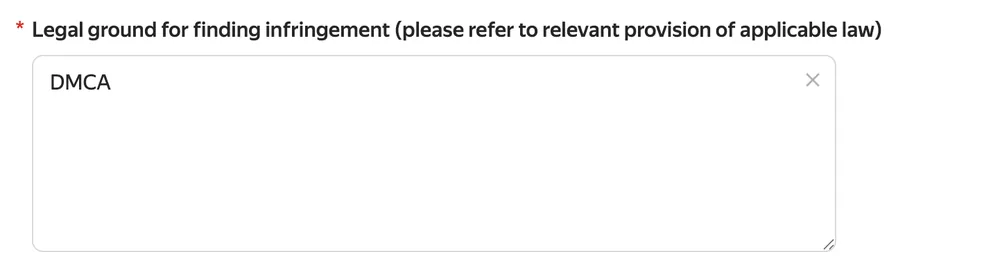
One field trips people up. Yandex asks for the legal ground for finding infringement, citing the relevant provision of applicable law. Even though Yandex is a Russian company and the DMCA is a U.S. law, simply writing DMCA in that field works.
Be precise with the URLs, pointing to the specific pages that appear in search rather than a homepage.
After you submit
Yandex reviews the complaint and removes valid URLs from its results. Keep a record of what you submitted, because this content tends to reappear at new addresses, and you will want to file again when it does.
Deindexing is one engine at a time, so file the equivalent request with Google and Bing as well if your content shows up there. And remember that search removal works best alongside a host takedown: our guide to sending a DMCA notice covers that side, and the explainer on what the DMCA is covers why these requests work.